
Girls’ Digital Access & Skills Hub (GDASH) Project
 codewatz@gmail.com
La région de Tabora, en Tanzanie, est confrontée à une crise aiguë d’exclusion des jeunes, compromettant directement le potentiel économique des jeunes femmes. La région affiche le taux le plus élevé d’abandon scolaire du pays (7,4 %), principalement dû à une combinaison dévastatrice de pauvreté, de mariages précoces (58 %) et de grossesses adolescentes (27 %) — ce qui signifie qu’environ une jeune fille sur quatre âgée de 15 à 19 ans est déjà mère. Les filles qui quittent l’école, comme Salma Idd (dont l’histoire de harcèlement et de manque de soutien est commune), ne sont pas autorisées à revenir dans l’enseignement formel et font face à une stigmatisation sociale profonde, à un harcèlement économique et à une dépendance à vie. Ces jeunes femmes sont exclues du marché du travail et des moyens de subsistance traditionnels, sans possibilité de seconde chance. Le problème n’est pas un manque de potentiel, mais une défaillance catastrophique dans la fourniture d’opportunités sûres et basées sur les compétences pour réintégrer l’économie moderne. Sans une intervention immédiate et accessible telle que le Girls’ Digital Access & Skills Hub (GDASH), ce cycle de pauvreté et d’exclusion se transmettra à la génération suivante.
Description du projet
Le Girls’ Digital Access & Skills Hub (GDASH) est un projet communautaire à petite échelle conçu pour fournir aux adolescentes et jeunes femmes (15–24 ans) hors du système scolaire des compétences pratiques numériques et professionnelles. Il cible 50 filles et jeunes mères hors du système scolaire, confrontées à une exclusion économique sévère et à la stigmatisation en raison de mariages précoces, de grossesses adolescentes ou d’abandon scolaire. Tabora constitue un point d’intervention urgent, affichant le taux le plus élevé d’abandon scolaire et des niveaux élevés de grossesses adolescentes.
L’objectif principal est de restaurer la dignité et l’autonomie en dotant les participantes de compétences pertinentes pour le marché dans l’économie numérique.
Composantes clés
- Formation aux compétences numériques : A comprehensive curriculum covering typing, graphic design, AI, social media marketing, basic coding, and photo/video editing.
- Entrepreneuriat et compétences transversales : formation en planification d’entreprise, communication et leadership, préparant les filles à lancer des micro-entreprises numériques.
- Soutien psychosocial : mentorat et sessions entre pairs hebdomadaires pour traiter les traumatismes, reconstruire l’estime de soi et favoriser la résilience à long terme.
- Engagement communautaire : dialogues impliquant plus de 1 000 membres de la communauté pour déconstruire la stigmatisation et promouvoir un environnement favorable aux secondes chances des filles.
Le projet prévoit la création d’un Hub numérique permanent avec des ordinateurs donnés, servant de ressource communautaire durable pour l’apprentissage et l’incubation d’activités économiques. L’objectif est que 70 % des participantes génèrent un revenu grâce aux activités numériques dans les 12 mois. Les meilleures diplômées recevront des kits de démarrage numérique (micro-subventions) pour lancer leur entreprise, contribuant à un fonds auto-soutenu pour les cohortes futures. Avec plus d’une décennie d’expérience de terrain, CODEWA s’engage à transformer ces jeunes femmes marginalisées en leaders numériques confiantes et économiquement indépendantes.
Objectif du Projet
To empower out-of-school adolescent girls and young mothers in Tabora by providing them with digital skills, entrepreneurship training, and psychosocial support, enabling them to reintegrate socially and economically, generate income, and rebuild their self-esteem, while fostering gender-equitable norms and shifting societal attitudes toward second-chance education and economic opportunities for girls.
Objectifs spécifiques
|
Focus Area |
Objective Statement |
|
Réintégration économique : |
Promote the social and economic reintegration out-of-school adolescent girls and young mothers in Tabora by equipping them with market-relevant digital skills, entrepreneurship knowledge, and access to startup resources. |
|
Impact économique : |
Reduce gender-based stigma and economic exclusion by enabling at least 70% of participants to generate income through digital livelihoods , while shifting perceptions about the value of girls who have dropped out of school. |
|
Changement de mentalité communautaire : |
Foster gender-equitable norms and support for second-chance education by engaging at least 1,000+ parents, teachers, community leaders, and peers through dialogues and awareness campaigns. |
|
Bien-être psychosocial : |
Améliorer le bien-être psychosocial et la résilience à long terme des participantes grâce à un mentorat continu, un soutien en santé mentale et des réseaux sûrs entre pairs, mesurés par des enquêtes pré/post sur la confiance et la santé mentale. |
Bénéficiaires du projet
The beneficiaries are clearly defined in two groups:
| Beneficiary Type | Description | Key Intervention |
| Bénéficiaires primaires (directs) | adolescentes et jeunes mères hors du système scolaire (15–24 ans) des zones urbaines et périurbaines de Tabora. Elles ont quitté l’école en raison de grossesses adolescentes, mariages précoces, abus ou échec aux examens et font face à la pauvreté et à la stigmatisation. | Interventions : compétences numériques, soutien à l’entrepreneuriat, services psychosociaux et accès au Hub numérique. |
| Bénéficiaires secondaires (indirects) | plus de 1 000 membres de la communauté, incluant parents, enseignants, responsables locaux et pairs | Interventions : campagnes de sensibilisation ciblées et dialogues communautaires pour déconstruire la stigmatisation, promouvoir l’acceptation et encourager des normes équitables entre les sexes. |
Project Status: Active & Operational (Updated February 2026)
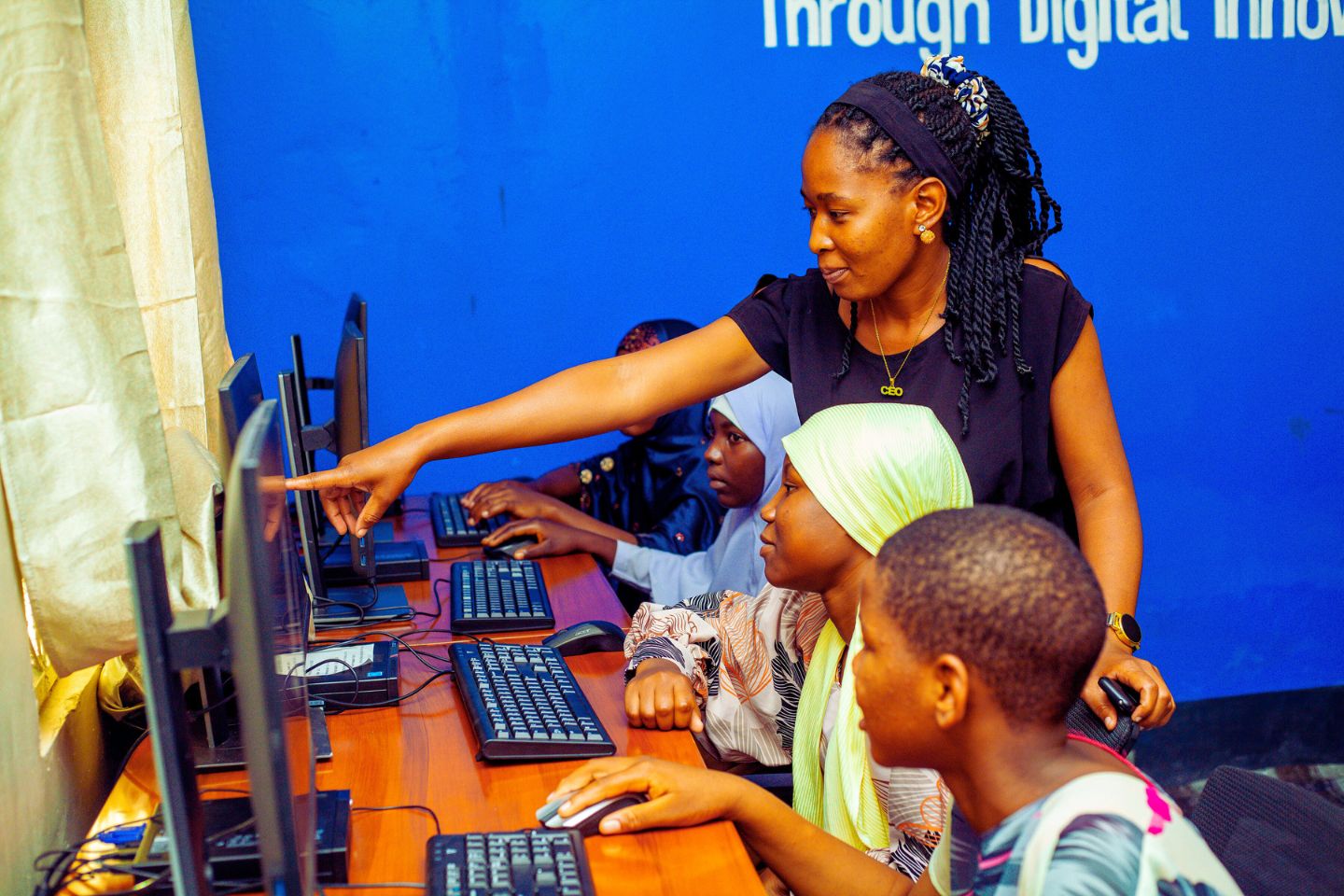
We are proud to announce that the GDASH Digital Hub has officially moved from the planning phase to full operation. As of March 2026, the hub is live and serving its first cohort of students.
Milestones Achieved:
-
Infrastructures : A modern, secure Digital Resource Hub is fully operational in Tabora Municipality.
-
Equipment: The center is equipped with 10 high-quality workstations, along with essential multimedia tools including a projector, printer, and camera.
-
Operational Readiness: Room painting, electrical installations, and furniture procurement (desks, chairs, and secure storage) are 100% complete.
-
Training Launch: The first cohort of 10 out-of-school girls and young mothers has been enrolled and has begun their 12-weeks journey into AI, coding, graphic design, and entrepreneurship.
🤝 Comment s’impliquer
The Hub is open, but our journey is just beginning. To ensure our students can learn consistently and reach their full potential, we invite partners to support these critical needs:
-
Digital Startup Kits: Support our top graduates by contributing to a micro-grant fund. These kits provide them with the hardware and initial software licenses needed to launch their own digital micro-enterprises immediately upon graduation.
-
The “GDASH Mobile” Lab (Truck/Minibus): Our most ambitious goal. We are seeking a dedicated vehicle to be converted into a mobile computer lab. This will allow us to bring digital literacy to rural areas of Tabora, ensuring that girls who cannot travel to the city center are not left behind.
-
Solar Power Solutions: To overcome local power outages and ensure uninterrupted learning, we are seeking partners to help us install a solar backup system to keep our workstations running 24/7.
-
Reliable Internet Connectivity: High-speed data is the lifeblood of our Hub. Your support helps cover monthly costs for research, AI training, and global connectivity.
-
Safe Transport & Nutrition: Many of our participants are young mothers traveling from peri-urban areas. Contributions help us provide transport subsidies and daily refreshments, ensuring they can focus on their studies without the burden of hunger or travel costs.
-
Equipment Upgrades: As demand grows, we aim to increase our capacity from 10 to 20 workstations, allowing us to double our impact in the community.
-
Expert Mentorship: Share your skills in AI, Graphic Design, or Business. Whether in person or via Zoom, your expertise can change a life.
Ensemble, nous pouvons faire du Centre un espace dynamique d’apprentissage, d’innovation et de transformation communautaire.
Aucun effort n’est trop petit. Chaque contribution compte.
Faisons du Centre un lieu d’espoir et d’innovation — ensemble.
Questions ? Contactez-nous : info@codewatz.org