
Girls’ Digital Access & Skills Hub (GDASH) Project
 codewatz@gmail.com
Tabora Region, Tanzania, is facing an acute crisis of youth exclusion, directly compromising the economic potential of young women. It records the nation’s highest school dropout rate (7.4%), driven primarily by a devastating combination of poverty, early marriage (58%), and teenage pregnancy (27%)—meaning nearly one in four girls aged 15–19 is already a mother. Girls who drop out, like Salma Idd (whose story of bullying and lack of support is common), are not allowed to return to formal education and face profound social stigma, economic harassment, and lifelong dependency. These young women are locked out of the job market and traditional livelihoods, with no available second-chance pathways. The problem is not a lack of potential, but a catastrophic failure to provide a safe, skills-based opportunity for reintegration into the modern economy. Without an immediate, accessible intervention like the Girls’ Digital Access & Skills Hub (GDASH), this cycle of poverty and exclusion will be passed on to the next generation.
Project Description
The Girls’ Digital Access & Skills Hub (GDASH) is a small-scale, community-based project designed to provide out-of-school adolescent girls and young women (aged 15–24) with practical digital and livelihood skills. It targets 50 out-of-school adolescent girls and young mothers (aged 15–24) who face severe economic exclusion and stigma due to early marriage, teenage pregnancy, or school dropout. Tabora is an urgent intervention point, recording the nation’s highest school dropout rate (7.4%) and high rates of teenage pregnancy.
The core objective is to restore dignity and self-reliance by equipping participants with market-relevant skills for the digital economy.
Key Components:
- Digital Skills Training: A comprehensive curriculum covering typing, graphic design, AI, social media marketing, basic coding, and photo/video editing.
- Entrepreneurship & Soft Skills: Training in business planning, communication, and leadership, preparing girls to launch digital micro-enterprises.
- Psychosocial Support: Weekly mentorship and peer sessions to address trauma, rebuild self-esteem, and foster long-term resilience.
- Community Engagement: Dialogues targeting over 1,000 community members to challenge stigma and promote supportive environments for girls’ second chances.
The project will establish a permanent Digital Resource Hub with donated computers, serving as a long-term community asset for learning and business incubation. We aim for at least 70% of participants to generate income through digital livelihoods within 12 months. The top graduates will receive digital startup kits (microgrants) to launch ventures, contributing to a self-sustaining fund for future cohorts. CODEWA, with over a decade of grassroots experience, is committed to transforming these marginalized young women into confident, economically independent digital leaders.
Project Goal
To empower out-of-school adolescent girls and young mothers in Tabora by providing them with digital skills, entrepreneurship training, and psychosocial support, enabling them to reintegrate socially and economically, generate income, and rebuild their self-esteem, while fostering gender-equitable norms and shifting societal attitudes toward second-chance education and economic opportunities for girls.
Project Objectives
|
Focus Area |
Objective Statement |
|
1. Economic Reintegration |
Promote the social and economic reintegration out-of-school adolescent girls and young mothers in Tabora by equipping them with market-relevant digital skills, entrepreneurship knowledge, and access to startup resources. |
|
2. Economic Impact |
Reduce gender-based stigma and economic exclusion by enabling at least 70% of participants to generate income through digital livelihoods , while shifting perceptions about the value of girls who have dropped out of school. |
|
3. Community Mindset Shift |
Foster gender-equitable norms and support for second-chance education by engaging at least 1,000+ parents, teachers, community leaders, and peers through dialogues and awareness campaigns. |
|
4. Psychosocial Well-being |
Enhance the psychosocial well-being and long-term resilience of participants by providing continuous mentorship, mental health support, and safe peer networks over the program, measured by pre/post surveys on confidence and mental health. |
Project Beneficiaries
The beneficiaries are clearly defined in two groups:
| Beneficiary Type | Description | Key Intervention |
| Primary Beneficiaries (Direct) | Out-of-school adolescent girls and young mothers aged 15–24 from urban and peri-urban areas of Tabora Municipality. These girls have dropped out due to teenage pregnancy, early marriage, abuse, or exam failure, and face deep poverty and stigma. | Market-relevant digital skills, entrepreneurship support, psychosocial services, and access to the Digital Hub. |
| Secondary Beneficiaries (Indirect) | Over 1,000+ community members including parents, teachers, caregivers, local leaders, and peers. | Targeted awareness campaigns and community dialogues designed to challenge stigma, promote acceptance, and foster gender-equitable norms. |
Project Status: Active & Operational (Updated February 2026)
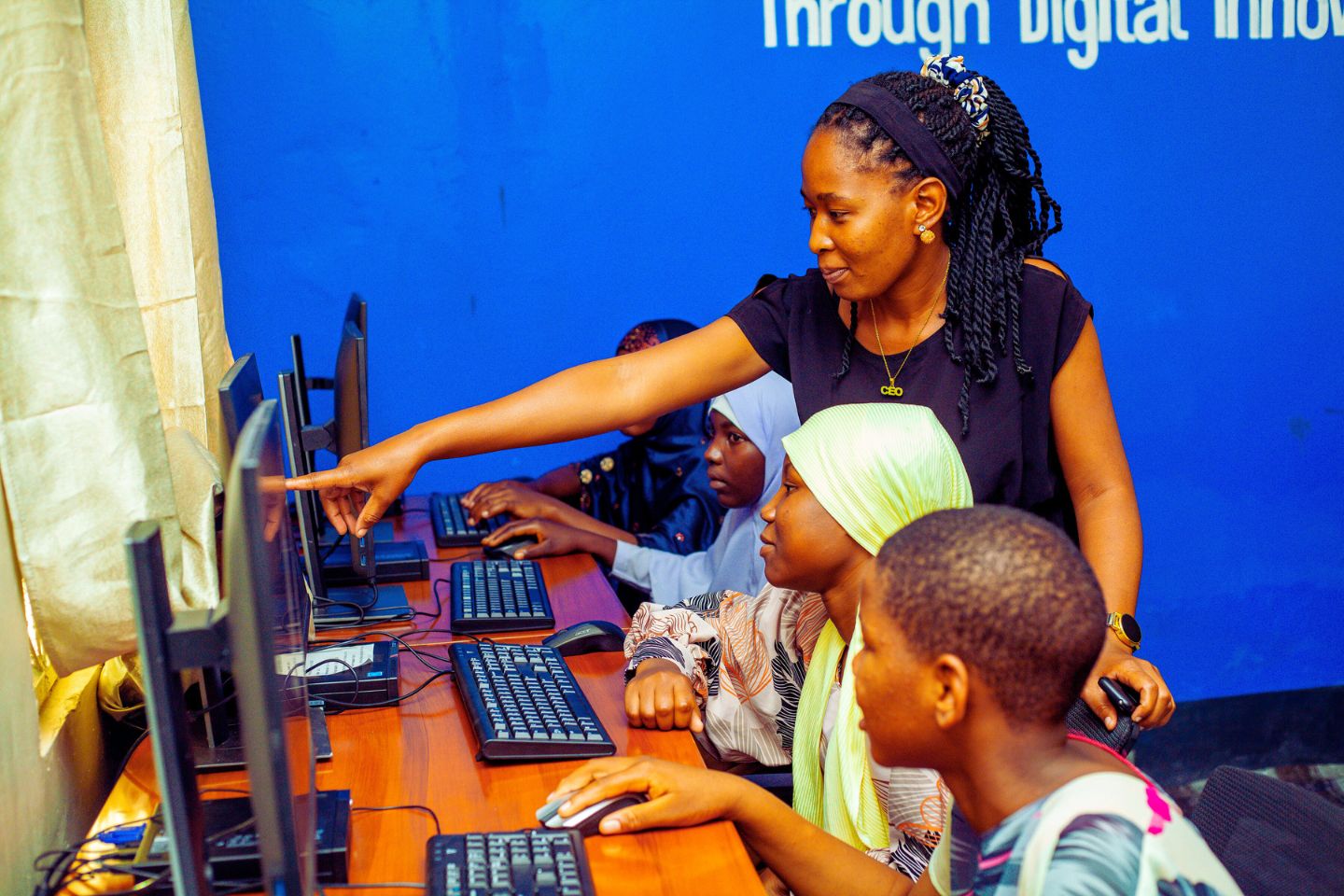
We are proud to announce that the GDASH Digital Hub has officially moved from the planning phase to full operation. As of March 2026, the hub is live and serving its first cohort of students.
Milestones Achieved:
-
Infrastructure: A modern, secure Digital Resource Hub is fully operational in Tabora Municipality.
-
Equipment: The center is equipped with 10 high-quality workstations, along with essential multimedia tools including a projector, printer, and camera.
-
Operational Readiness: Room painting, electrical installations, and furniture procurement (desks, chairs, and secure storage) are 100% complete.
-
Training Launch: The first cohort of 10 out-of-school girls and young mothers has been enrolled and has begun their 12-weeks journey into AI, coding, graphic design, and entrepreneurship.
🤝 How to Get Involved
The Hub is open, but our journey is just beginning. To ensure our students can learn consistently and reach their full potential, we invite partners to support these critical needs:
-
Digital Startup Kits: Support our top graduates by contributing to a micro-grant fund. These kits provide them with the hardware and initial software licenses needed to launch their own digital micro-enterprises immediately upon graduation.
-
The “GDASH Mobile” Lab (Truck/Minibus): Our most ambitious goal. We are seeking a dedicated vehicle to be converted into a mobile computer lab. This will allow us to bring digital literacy to rural areas of Tabora, ensuring that girls who cannot travel to the city center are not left behind.
-
Solar Power Solutions: To overcome local power outages and ensure uninterrupted learning, we are seeking partners to help us install a solar backup system to keep our workstations running 24/7.
-
Reliable Internet Connectivity: High-speed data is the lifeblood of our Hub. Your support helps cover monthly costs for research, AI training, and global connectivity.
-
Safe Transport & Nutrition: Many of our participants are young mothers traveling from peri-urban areas. Contributions help us provide transport subsidies and daily refreshments, ensuring they can focus on their studies without the burden of hunger or travel costs.
-
Equipment Upgrades: As demand grows, we aim to increase our capacity from 10 to 20 workstations, allowing us to double our impact in the community.
-
Expert Mentorship: Share your skills in AI, Graphic Design, or Business. Whether in person or via Zoom, your expertise can change a life.
Together, we can make the Hub a vibrant space for learning, innovation, and community transformation.
No effort is too small. Every dollar counts.
Let’s turn the Hub into a home of hope and innovation—together.
???? Questions? Contact us at info@codewatz.org